When Rahman Met Zimmer: The Sound of Ramayana
Two Oscar winning composers, three and a half years of work and one of the richest music deals in Indian film history. Jubliz listens closely to the most talked about soundtrack of the year.
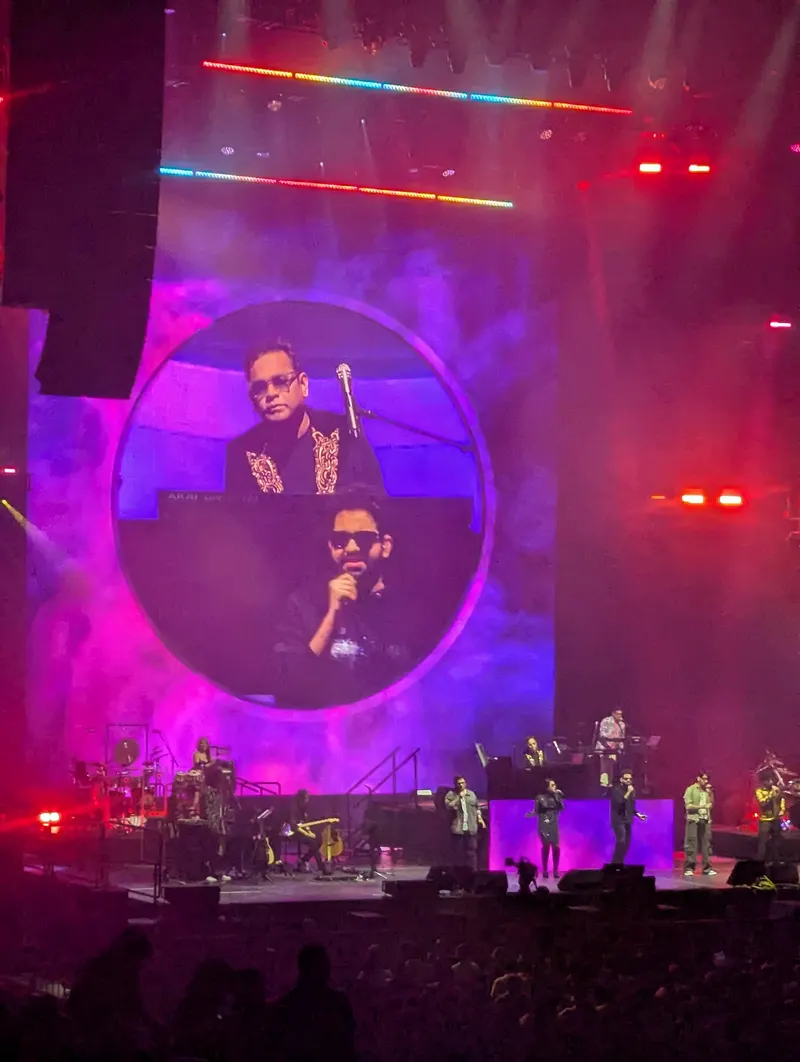
In India, the Ramayana has always been heard before it is seen. It is sung in temples and recited in homes, chanted at weddings and performed in village Ramlilas every autumn. For many families, its most beloved screen version is remembered as much for its music as its images. Any new adaptation therefore faces a question as old as the epic itself: what should the Ramayana sound like?
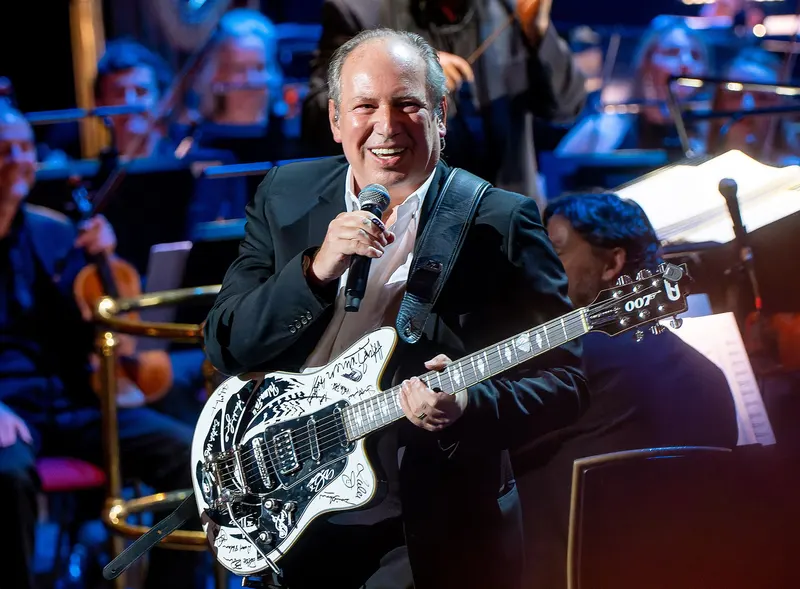
Nitesh Tiwari's answer was audacious. He brought together A.R. Rahman and Hans Zimmer, two of the most celebrated composers alive, for their first collaboration on an Indian feature film.
Then: the music that shaped a nation's memory
When Ramanand Sagar's Ramayan aired on Doordarshan in the late 1980s, the composer Ravindra Jain gave it a devotional soundscape that millions of Indians can still hum today. Its chaupais and bhajans did not feel like a film score; they felt like prayer. That is the emotional benchmark this new soundtrack inherits, whether it likes it or not.
The two men now carrying that responsibility arrive with extraordinary histories. A.R. Rahman, the Mozart of Madras, transformed Indian film music with Roja in 1992, then went on to Lagaan, Jodhaa Akbar and dozens of landmark albums before winning two Academy Awards for Slumdog Millionaire in 2009. Hans Zimmer, the German born composer behind Gladiator, The Dark Knight, Inception, Interstellar and Dune, has won Oscars for The Lion King and Dune, and reshaped the sound of modern blockbuster cinema. Ramayana is his first score for an Indian production.
A friendship becomes a collaboration
The composers are not strangers. Rahman has said their association goes back to 2009, the year of his Oscar triumph, and he described a warm, friendly atmosphere when he returned to Zimmer's studio. The public got its first glimpse of the partnership on 4 July 2025, when Rahman posted a selfie with Zimmer on Instagram, captioned with nothing more than Zimmer's handle and the film's hashtag. It spread at lightning speed, with fans and fellow artists calling it a historic moment for Indian music.
Rahman has been disarmingly honest about the pressure. In a January 2026 interview with The Hollywood Reporter India, he admitted that scoring something so iconic was terrifying for both composers, and explained that he had to unlearn conventional ideas of what Ramayana music should sound like in order to create something fresh. He has also spoken about how art transcends faith, a meaningful reflection given the cultural weight of the story and the diversity of the team telling it.
Now: three and a half years in the making
Rahman has called Ramayana the most exciting project he has worked on. He told Bollywood Hungama that the soundtrack took nearly three and a half years to develop. By the time the anthem Jai Jai Ram was released, he said, around 70 percent of the album was already out, with further surprises still to come. Asked to describe the music in a single word, he chose the only word that fits: epic.
The music has been released in carefully staged waves, building the campaign rather than following it:
- Ramayana: The Introduction theme, released by Sony Music India in July 2025 with the film's first glimpse.
- Rama Theme, released in April 2026 alongside the teaser.
- Trailer Theme, released in August 2026 after the first trailer.
- The EP, featuring Jai Jai Ram sung by Shreya Ghoshal and Arijit Singh with Kumar Vishwas; Ravana Tandav with Vishal Dadlani; Sita's Aspiration, featuring A.R. Ameen among its voices; an orchestral Jai Jai Ram by Zimmer and Rahman; and the Rama Theme.
The poet Kumar Vishwas runs through the songs like a golden thread, giving the lyrics a rich Hindi literary voice that balances the international orchestral canvas. The pairing of Arijit Singh and Shreya Ghoshal, two of the most beloved voices of their generation, signals that the songs are meant to live far beyond the cinema hall.
The business of the music
The soundtrack is also a formidable commercial asset. T-Series reportedly locked the music rights for both parts of the saga with an advance of ₹75 crore, one of the largest music deals in Indian film history. For a devotional franchise, the songs have a long shelf life: they will be played in temples, at festivals and at family gatherings for years, which is exactly what such a price anticipates.
Fan buzz
Online reaction to the music has been largely warm, though not without debate. When Rahman first shared a glimpse of the background score on Instagram, fans flooded the comments with talk of goosebumps and legends uniting. Ravana Tandav, connected to Yash's Shiv Tandav sequence released on Dussehra, has drawn particular attention, although reactions to it were mixed, and the Rama Theme has been widely shared as the sonic signature of the campaign.
The premiere surprise
The Los Angeles premiere produced a twist few expected. Several early viewers praised the visuals and performances, yet named the music as their biggest disappointment. Reviewer Venky Reviews questioned parts of the score, and Great Andhra's roundup noted complaints that the background music felt underwhelming in parts of the second half.
It is worth treating this carefully. Premiere audiences are a small and unusual sample, and film music often grows on listeners with repetition, especially songs released before the film. Many of Rahman's most loved albums were initially received with puzzlement. Still, it is the most surprising thread in the early reactions, and one Jubliz will follow closely when full reviews arrive.
Next: the music of war
If Part One's music is about devotion, love and exile, Part Two's will need to carry Hanuman's leap, the burning of Lanka and a war of cosmic proportions. With rights already secured for both films, the full Ramayana soundtrack is being conceived as a single sweeping work, and its true shape will only be clear when the saga is complete.
Jubliz takeaway: The Rahman and Zimmer partnership has already succeeded as a cultural event and a commercial deal. Its artistic verdict depends on one thing: whether the score feels woven into the film's emotion, or simply grand in its own right.