The Architects: Nitesh Tiwari, Namit Malhotra and Yash the Producer
A storyteller from small-town India, a visual effects tycoon who conquered Hollywood, and a Kannada superstar who chose to bet on himself. Jubliz meets the three people who have carried Ramayana from dream to Diwali.
Every great epic has a quiet origin story of its own, and Ramayana's begins not on a battlefield but around a table. Long before the trailers, the billion views and the Los Angeles red carpet, three people with almost nothing in common agreed to attempt something Indian cinema had never dared: a live action Ramayana built on a global scale, released in two parts, and designed to stand beside the biggest fantasy films the world has seen.
On 5 November 2026, that gamble finally meets its audience. Before it does, it is worth understanding the people who made it, because Ramayana is, more than most films, a portrait of its makers. Its tenderness belongs to its director. Its spectacle belongs to its producer. And its swagger, unmistakably, belongs to its Ravana.
The storyteller: Nitesh Tiwari
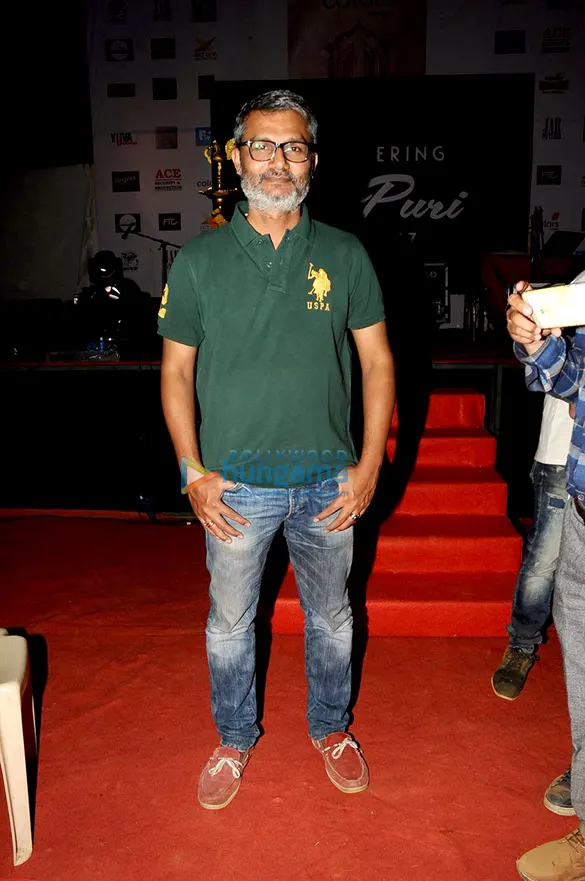
Nitesh Tiwari is the least flamboyant man in this story, and perhaps the most important. A graduate of IIT Bombay who spent years in advertising before turning to cinema, he made his name with films that wear their hearts openly. Chillar Party, which he co-directed in 2011, won the National Award for Best Children's Film. Bhoothnath Returns followed in 2014. Then came Dangal in 2016, a wrestling drama about a father and his daughters that became the highest grossing Indian film worldwide, propelled by an astonishing run in China.
He proved it was no accident. Chhichhore (2019), a warm and funny meditation on failure and friendship, won the National Award for Best Hindi Feature Film. Bawaal (2023) took him into romantic drama. Across all of them runs a single thread: Tiwari is a director of families, of ordinary people under extraordinary pressure, of small gestures that land like thunder.
That sensibility is exactly why he was chosen, and exactly why the choice raised eyebrows. The Ramayana is the most intimate family story in the Indian imagination, a tale of a son, a father, brothers, a wife and a promise. Yet it is also a story of flying chariots, demon armies and divine weapons. Tiwari's challenge has been to keep the intimacy alive inside the spectacle.
He co-wrote the screenplay with Shridhar Raghavan, with dialogue by Shreyas Jain and Tiwari himself. When the film was first introduced to the world, he described the story as one that carries the soul of our culture, adding that the team's mission was to honour that soul with the cinematic scale it deserves. It is a modest sentence for an immodest undertaking, and it captures him perfectly.
The showman: Namit Malhotra
If Tiwari is the film's conscience, Namit Malhotra is its engine room. Born into a film family, with a grandfather who was a cinematographer and a father, Naresh Malhotra, who was a producer, he began in the mid 1990s with a small Mumbai post-production outfit. In 1997 he merged it with his father's equipment business to form Prime Focus, and by the mid 2000s he was expanding aggressively overseas.
The decisive move came in 2014, when Prime Focus combined with London's Double Negative to create DNEG. Under Malhotra, DNEG has become one of the most decorated visual effects houses in the world, with eight Academy Awards for Best Visual Effects, including Inception, Interstellar and the Dune films. For two decades, Indian technicians helped build Hollywood's most celebrated worlds. Ramayana is the moment Malhotra turned that machinery homeward.
His personal investment is written into the film's very billing. The film is billed as Namit Malhotra's Ramayana, a credit usually reserved for directors. When he announced the two-part release in November 2024, he spoke of presenting the most authentic and visually stunning adaptation of India's history, truth and culture for audiences everywhere. That global ambition explains almost every decision since: the Hollywood action designers, the IMAX format, Sony Pictures' international distribution, and a world premiere at the Academy Museum of Motion Pictures in Los Angeles.
Malhotra has also become the film's most passionate public defender. When the first teaser drew criticism of its visual effects, he and Tiwari urged audiences to remember that the work was unfinished and built for the biggest screens. When the full trailer crossed one billion views across platforms in five days, he called it a proud moment for India.
His road to release has not been entirely smooth. On 7 October 2026, the Income Tax Department began searches at Prime Focus's Mumbai offices and, according to reports, its Film City studio and his residence, reportedly in connection with foreign remittances. Prime Focus told the stock exchanges that it was fully cooperating and that no findings or alleged violations had been communicated to it. The department has not disclosed any findings, and no wrongdoing has been established, but the episode added an unexpected layer of tension to the final month of the campaign.
The gambler: Yash
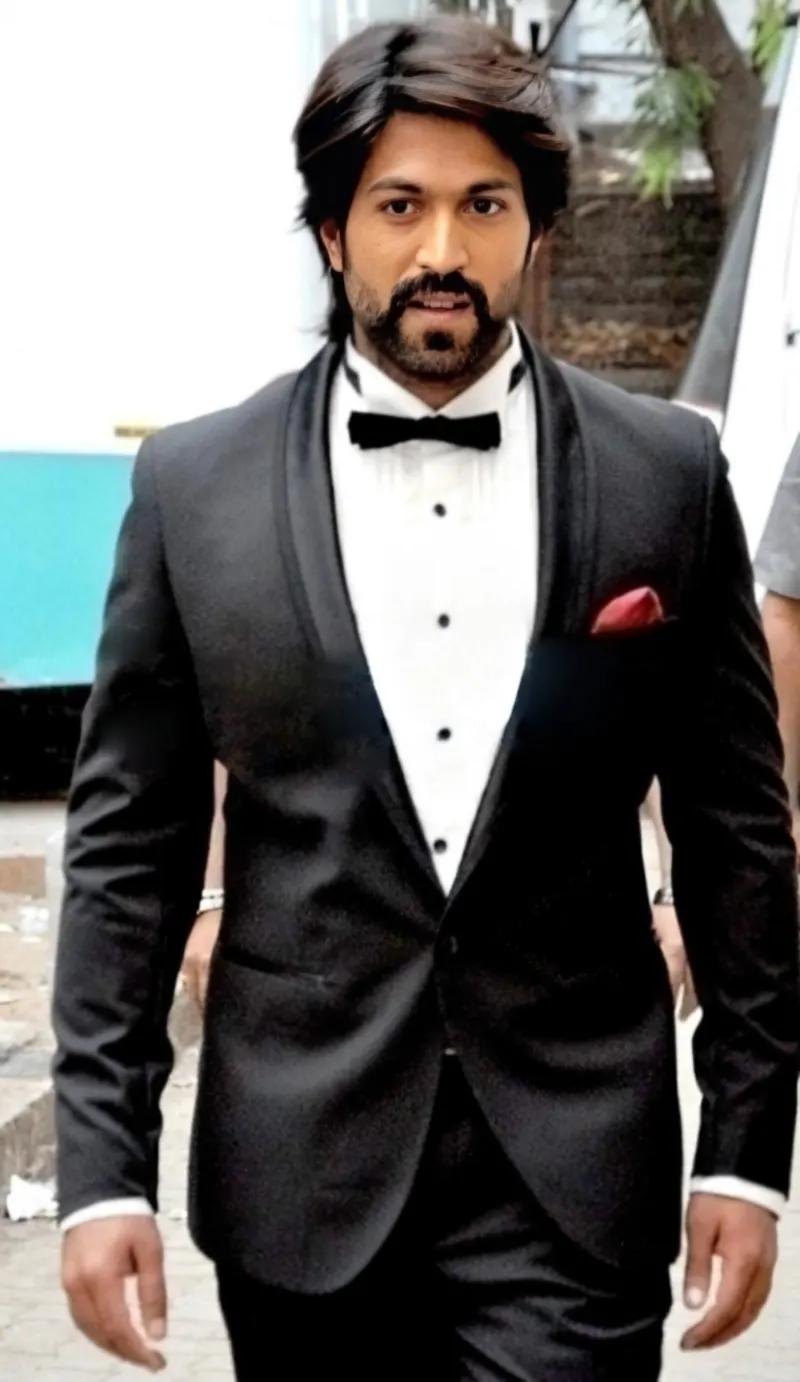
The most cinematic story of all belongs to Yash. Born Naveen Kumar Gowda, he rose through Kannada television before becoming a film star, and then, with KGF: Chapter 1 (2018) and Chapter 2 (2022), a phenomenon. KGF 2 grossed around ₹1,200 crore worldwide and turned a regional hero into a pan-Indian icon with a devoted, almost devotional, fan base.
When the Ramayana team approached him to play Ravana, industry reports describe a winding road. He reportedly stepped away from the role, returned as a co-producer through his company Monster Mind Creations, and then agreed to play Ravana without a conventional fee, taking a producer's share instead. It is the kind of decision that defines careers. If Ramayana soars, Yash shares in its success as an owner, not merely an employee. If it stumbles, he carries the loss twice.
The stakes rose further in 2026. His August release Toxic: A Fairy Tale for Grown-Ups underperformed against its reported budget, which means Ramayana now carries the weight of restoring his box office aura. He began shooting in February 2025 with the film's war sequences, after two days of costume trials, and he has since become the loudest heartbeat of the campaign. At the premiere, fans in Los Angeles chanted his character's name.
An unlikely alliance
On paper, the three represent three different schools of Indian filmmaking. Tiwari is the patient craftsman of the Hindi heartland. Malhotra is the global industrialist of visual effects. Yash is the mass market superstar of the South. Put them in a room and you might expect friction.
Instead, their differences are the film's strategy. Tiwari protects the story and its emotional truth. Malhotra delivers a scale that can compete with Hollywood. Yash brings the crowds, especially across the southern states, where pan-Indian films now win or lose their biggest battles. It is a coalition as much as a creative team, and like all coalitions, it depends on balance.
What the early verdict says about them
The first reactions from the Los Angeles premiere read almost like a report card on the three partners. Viewers praised the colossal scale, which is Malhotra's promise. They raved about Yash's magnetic Ravana. And the most common reservation, that spectacle sometimes outruns emotion, lands squarely in Tiwari's territory, precisely where he has always been strongest. It is a fascinating irony: the director famous for heart is being asked whether he has left enough of it in his biggest film.
What comes next
The partnership does not end on 5 November. The same team is already deep into Part Two, which Ranbir Kapoor said in August was around half shot. Bollywood Hungama has since reported that the second film may move from Diwali 2027 to Diwali 2028, with the new date possibly revealed in a post-credit scene. Whatever the timing, the three architects are bound together for years, not months.
Jubliz takeaway: Watch how the reviews divide the credit. Praise for emotion will go to Tiwari, praise for scale to Malhotra and DNEG, and the opening weekend will be read as a verdict on Yash's audacious bet. If all three are praised in the same breath, Indian cinema will have found a new model for making epics.