Madhuri Dixit: The Queen of Bollywood Adds a Historic Television Milestone to Her Remarkable Legacy
From a reported audience surge for Kon Honar Crorepati to adventurous acting roles, nurturing dance talent and championing children’s rights, Madhuri Dixit continues to give audiences reasons to celebrate her.
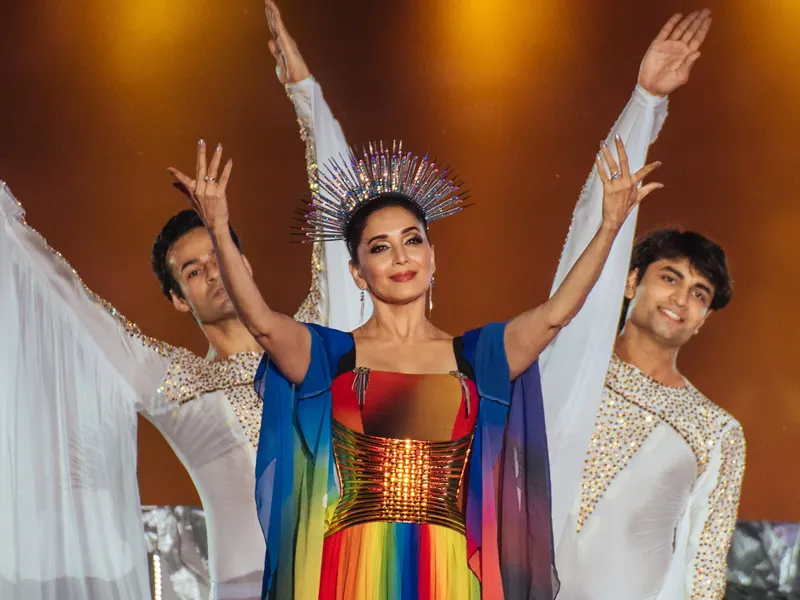
There is something unmistakable about Madhuri Dixit’s presence on screen. The expressive eyes, the warmth of her smile and the assurance of a performer who understands her craft have captivated audiences across generations. Now, the Queen of Bollywood is bringing those qualities to another significant chapter: hosting the eighth season of Kon Honar Crorepati, the Marathi counterpart of Kaun Banega Crorepati.
Madhuri has made history as the programme’s first female host, following predecessors including Sachin Khedekar, Swapnil Joshi and Nagraj Manjule. Her arrival has also generated headlines about a remarkable increase in the show’s audience.
According to reports published on 14 October 2026, the programme reportedly reached the number-one position in Maharashtra and second place nationally. The coverage cited claims of a 14-fold increase in viewership in Maharashtra and a 36-fold increase across India. These are promotional figures reported by publications; the underlying ratings methodology and comparison period have not been disclosed. Even with that distinction, her historic appointment gives this season a compelling place in Marathi television’s story.
The season premiered on Sony Marathi and SonyLIV on 12 October, with Sonali Bendre joining Madhuri as the opening celebrity guest. Their appearance brought together two familiar faces in a setting built around conversation, knowledge and the hopes of contestants. It also marked Madhuri’s return to the hosting chair more than two decades after Kahin Na Kahin Koi Hai in 2002.
For a performer whose career has encompassed romance, drama, comedy and dance, the quiz-show format offers a different opportunity. Here, listening matters as much as speaking. A contestant’s nervous smile, a family’s expectations and the significance of a hard-earned answer become part of the programme’s emotional life. Madhuri’s warmth is particularly well suited to that space.
Her television milestone arrives during a creatively adventurous period. Recent work has taken her through the mystery surrounding a celebrated actor in The Fame Game, the unsettling territory of Mrs Deshpande and the dark comedy of Maa Behen. These choices reveal an actor willing to explore flawed, unpredictable and complicated women. In interviews, she has spoken about seeking characters that challenge her and make her excited to return to the set.
In Suresh Triveni’s Maa Behen, she shares the screen with Triptii Dimri and Dharna Durgaa in an unconventional mother-daughter story. The collaboration places her experience alongside performers from a younger generation, with family friction and chaotic circumstances driving the comedy. It is another example of her willingness to embrace material that asks something fresh of her.
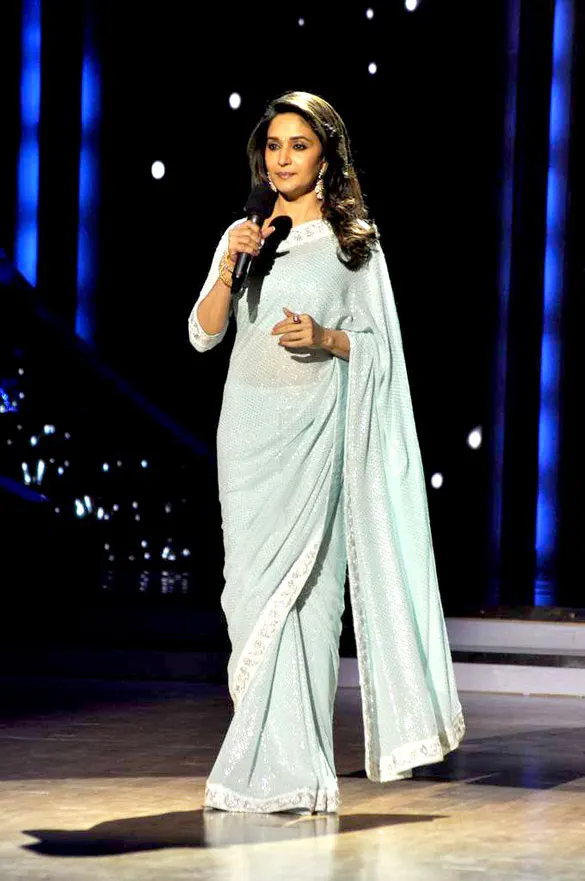
Dance remains central to her contribution to entertainment. Through programmes including Jhalak Dikhhla Jaa, Dance Deewane and So You Think You Can Dance India, she has shared her experience with emerging performers. These appearances have allowed audiences to see the artist behind the celebrated performances: someone attentive to expression, musicality and the effort required to make movement communicate emotion.
Her online academy, Dance With Madhuri, has also formed part of that commitment to sharing her craft. Speaking about the initiative, she has described her ambition to develop it further, extending her relationship with dance beyond her own performances.
There is substantial work beyond entertainment, too. UNICEF appointed Madhuri its Celebrity Advocate for child rights in India in 2014. The organisation documents her support for preventing child labour and child trafficking, including public-service messages used to educate communities. Her advocacy has also addressed children’s nutrition, education, care and protection.
She also joined Chief Minister Shivraj Singh Chouhan in Bhopal in June 2014 to launch Madhya Pradesh’s Mamta Abhiyan, which focused on maternal and newborn survival. This work gives another dimension to her public influence, using a familiar and trusted voice to draw attention to families’ wellbeing.
For admirers in India, Australia and across the diaspora, Madhuri’s appeal carries both familiarity and anticipation. There is the pleasure of remembering favourite performances, alongside the curiosity of seeing what she will attempt next.
That is what makes this chapter worth celebrating. She is taking on demanding characters, sharing her experience with dancers, supporting children’s rights and stepping into a historic hosting role. The affection attached to the title “Queen of Bollywood” finds fresh expression in a career that continues to move forward.
Madhuri Dixit still has new stories to tell, new performers to encourage and new audiences to meet. Her place in Bollywood’s history is secure, and her present remains full of possibility.