From Ramanand Sagar to Nitesh Tiwari: Ramayana on Screen
Every new Ramayana is watched with every old Ramayana in mind. Jubliz traces more than a century of adaptations, from silent film to Sunday television to arena theatre, to understand exactly what Nitesh Tiwari is measured against.
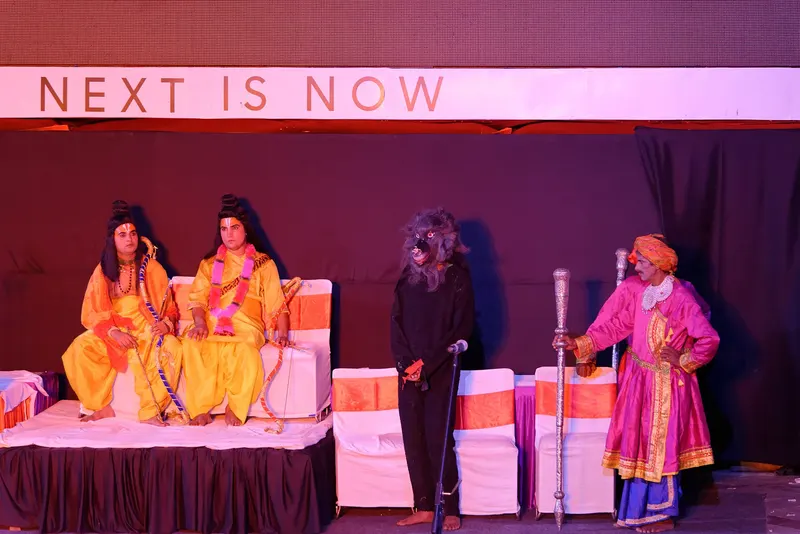
Few stories in human history have been retold as often as the Ramayana. Long before cinema, it lived in Valmiki's Sanskrit verses, in Kamban's Tamil epic, in Tulsidas's Ramcharitmanas, and in hundreds of regional and folk versions. It travelled across Asia to become the Ramakien in Thailand, the Reamker in Cambodia and the Kakawin Ramayana in Java. Every autumn, Ramlila performances across northern India still re-enact it in village squares, a tradition UNESCO recognises as intangible cultural heritage.
When Indian cinema was born, it was almost inevitable that the Ramayana would be among its first great subjects. Understanding that long history explains why expectations for the new film are so intense, and so personal.
The silent and early sound era
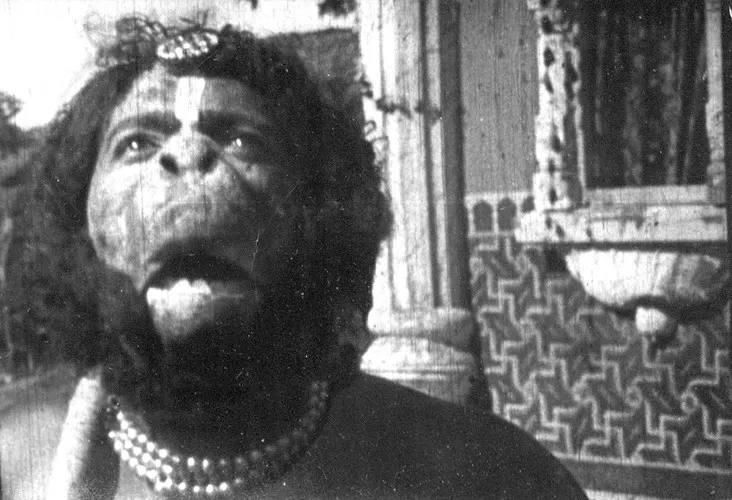
Dadasaheb Phalke, the father of Indian cinema, brought the epic to the screen as early as 1917 with Lanka Dahan, the burning of Lanka. Contemporary accounts describe audiences removing their shoes in reverence when Rama appeared, a sign that, from the very beginning, Indian viewers treated these films as something closer to darshan than entertainment.
The sound era deepened that bond. Vijay Bhatt's Ram Rajya (1943) became a landmark, and it is often said to be one of the very few films Mahatma Gandhi ever watched. In the decades that followed, Hindi films such as Sampoorna Ramayana (1961) made the story a staple of family viewing.
The Telugu tradition
Telugu cinema built perhaps the richest Ramayana tradition of all. N.T. Rama Rao's luminous performances made him synonymous with divine roles, most famously in Lava Kusa (1963), which retells the later chapters of the epic. Bapu's Sampoorna Ramayanam (1971) and his much later Sri Rama Rajyam (2011), starring Nandamuri Balakrishna and Nayanthara, carried the tradition across generations. In 1997, Gunasekhar's Ramayanam took a bold approach, casting more than 3,000 child actors and featuring a young N.T. Rama Rao Jr as Rama.
The television phenomenon
No adaptation has ever matched the cultural impact of Ramanand Sagar's Ramayan, broadcast on Doordarshan from 1987 to 1988. Streets famously emptied on Sunday mornings, shops shut, and families gathered around a single television set as though attending a temple. Ravindra Jain's devotional music became part of the national soundtrack. Arun Govil and Dipika Chikhlia became so identified with Rama and Sita that they were greeted with folded hands wherever they went, and Arvind Trivedi's Ravana became the definitive villain of a generation.
The series proved its power again in 2020, when it was rebroadcast during the pandemic lockdown and drew record audiences all over again, introducing it to children whose parents had watched it as children themselves. Later television versions, including the 2008 Ramayan, Siya Ke Ram and Shrimad Ramayan, found devoted audiences, but Sagar's series remains the gold standard. That is precisely why Arun Govil's casting as Dashrath in the new film carries such emotional weight.
New forms, new perspectives
The epic has also been boldly reinterpreted. Ramayana: The Legend of Prince Rama (1993), an Indo-Japanese animated film co-directed by Yugo Sako, is still regarded by many fans as one of the finest adaptations ever made, and IMDb reviewers have called it possibly the best version available. Ramayana: The Epic (2010) brought the story to Indian animation. Mani Ratnam's Raavanan (2010) transposed the epic into a modern forest conflict and told it with striking sympathy for its Ravana figure.
Literature and documentary have joined in. Amish Tripathi's novels reimagined Rama for a new generation of readers, and his television documentary Legends of the Ramayana explored the epic's sacred geography. On stage, Humare Ram, starring Ashutosh Rana as Ravana, has played more than 450 shows since January 2024, including a run at Dubai Opera and London dates in 2026, using large LED visuals and choreographed set pieces.
The Adipurush lesson
The most recent big screen attempt, Adipurush (2023), casts a long shadow over Nitesh Tiwari's film. Om Raut's adaptation, starring Prabhas, Kriti Sanon and Saif Ali Khan, faced fierce criticism of its visual effects, character design and colloquial dialogue, some of which was revised after release. The backlash showed how quickly audiences now judge a mythological epic, and how unforgiving they become when it feels disconnected from tradition.
That history explains the forensic scrutiny of every Ramayana trailer frame. It also explains why Tiwari and Namit Malhotra have stressed authenticity, years of research and respect for Valmiki at every stage of their campaign.
Now: where the new film fits
Nitesh Tiwari's Ramayana attempts something no previous version has tried: to combine the reverence of Ramanand Sagar, the scale of Hollywood fantasy and the emotional intimacy of his own films. Early premiere viewers say the team largely stays true to the epic, with one comparing its grandeur to The Lord of the Rings. Others felt that omissions made parts of the narrative feel flat and serial like, a revealing comparison given that, for millions, the serial remains the benchmark rather than a criticism.
Next: the Ramayana keeps travelling
This will not be the last Ramayana. Part Two is already being shot, a Hanuman spin-off has been reported, and dubbed releases, including an English version, may introduce the epic to audiences who have never encountered it. If the film succeeds, it could do for the Ramayana abroad what the 1987 serial did at home: create a shared visual memory for a new generation.
Jubliz takeaway: Ramayana is not competing with other films this Diwali. It is competing with memory. If it earns a place beside Sagar's Ramayan in family viewing for the next generation, it will have succeeded, whatever the final box office figures say.