Building Ayodhya, Mithila and Lanka: Inside the Sets
Before a single pixel was rendered, carpenters, painters and designers raised entire kingdoms in Mumbai. Jubliz walks the streets of the most ambitious physical sets Indian cinema has built in a generation.
There is a moment in every great epic when the audience stops watching a film and starts inhabiting a world. In The Lord of the Rings, it is the first sight of the Shire. In Baahubali, it is the waterfall and the towering gates of Mahishmati. For Ramayana, that moment will arrive in Ayodhya, the city of Rama's childhood, and the team has spent years making sure it feels like a place you could walk into rather than a backdrop you merely look at.
Much of the public conversation around the film has fixated on its visual effects. Yet one of its most important creative choices is easy to overlook in a trailer: wherever possible, the production built real spaces for its actors to stand in. The kingdoms of the epic began as timber, plaster, fabric and paint in Mumbai, long before any computer extended them into the horizon.
Then: a city of dreams in Goregaon
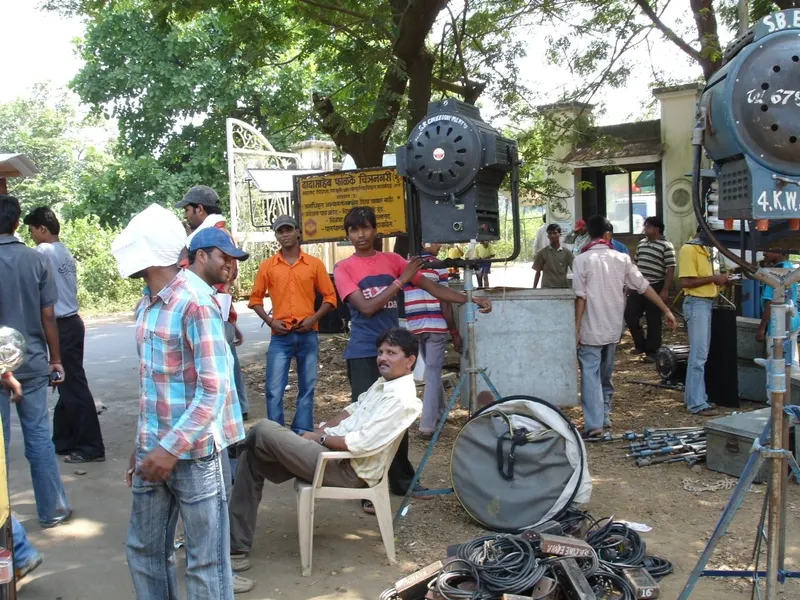
Mumbai's Film City, the sprawling studio complex in Goregaon set against the edge of Sanjay Gandhi National Park, has hosted Hindi cinema's grandest fantasies for decades. Ramayana brought a scale even its veterans had rarely seen. In mid 2024, as the principal cast prepared to resume shooting, Bollywood Hungama, citing Mid-Day, reported that twelve opulent sets were being erected there to recreate Ayodhya and Mithila, the two royal cities where Rama's and Sita's stories begin.
The shoot itself had already produced the campaign's first viral moment. In April 2024, photographs from the set showing Ranbir Kapoor and Sai Pallavi in royal costume leaked online, giving fans their first unofficial glimpse of Rama and Sita and forcing the production to tighten security. It was an early sign of how fiercely audiences would scrutinise every frame of this film.
The designers behind the kingdoms
The world of the film is shaped by production designers Ravi Bansal and Ramsey Avery, a pairing that deliberately blends Indian and Hollywood experience. Credits also list Amit Ray and Subrata Chakraborty in production design, Ramesh Andhale as art director, and Shruti Rawat as head set decorator, with a large team of set designers, draughtsmen and concept artists behind them. Cinematographer Mahesh Limaye, credited alongside Pankaj Kumar, is among those charged with lighting these spaces.
The blend is the point. Indian designers bring a deep understanding of temple architecture, royal ornament, textiles and regional craft traditions. International designers bring experience of building sets that must later merge invisibly with digital environments. Neither could have built this film alone.
Three kingdoms, three moods
The epic demands three very different worlds, and each has its own emotional temperature.
Ayodhya is the heart of Part One. It must feel prosperous, ordered and loved, a kingdom whose people adore their prince, so that his exile lands as a genuine wound. This is where Arun Govil's Dashrath rules, where Kaikeyi's boons are claimed, and where the family drama unfolds.
Mithila, the kingdom of King Janaka, is where Sita grows up and where Rama wins her hand by lifting and breaking Shiva's great bow at the swayamvar. It calls for a softer, more devotional palette, a world of ritual and celebration.
Lanka, Ravana's golden city, is the counterpoint: imperial, opulent and imposing. In tradition, it was a city of gold of unrivalled splendour. Concept art and early footage suggest the design team has leaned into that sense of overwhelming power, a deliberate contrast to the calm sanctity of Ayodhya and the forests of exile.
Between them lies the wilderness of the exile years, the forests where Rama, Sita and Lakshman build their simple life, and where Surpanakha, Mareech's golden deer and finally Ravana appear. Those landscapes rely more heavily on digital extension, but they too were grounded in practical elements on set.
Battlefields on a Mumbai beach
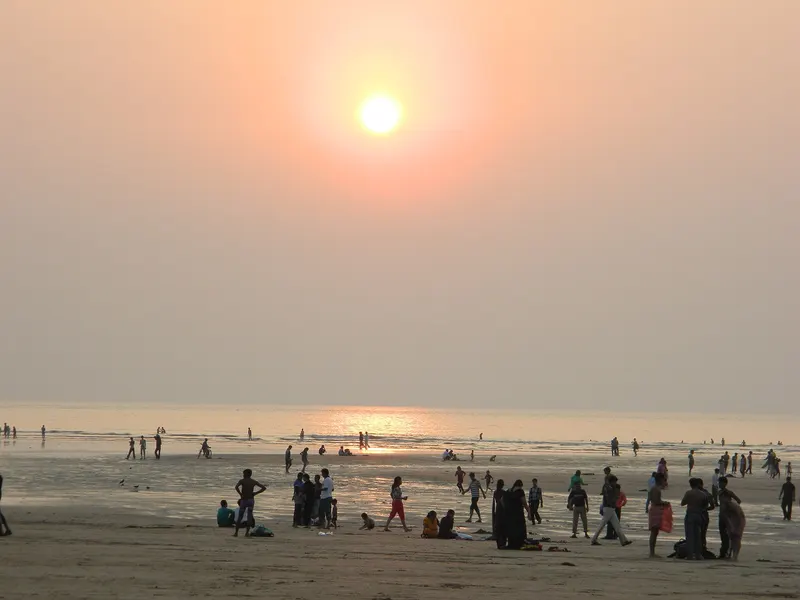
Not every location was built under a studio roof. When Yash began filming as Ravana in February 2025, his first days were devoted to war sequences, and some of the most important battle scenes were shot at Aksa Beach in Mumbai, before the unit moved to a studio in Dahisar. Reports said the war portions were mounted on a grand scale, with choreography designed to show Ravana as a master strategist rather than a brute.
This is where the sets meet the film's international action team. Terry Notary, celebrated for movement work on the Planet of the Apes films, and Guy Norris, the veteran stunt designer behind Mad Max: Fury Road, lead the action choreography, alongside, according to reports, Indian action director Vicky Arora. Their task is to make divine combat feel physical, heavy and dangerous rather than weightless.
Now: a crew of more than 10,000
The sheer size of the physical production is reflected in its workforce. Bollywood Hungama reported the makers' claim that Ramayana is the first Indian film to onboard more than 10,000 crew members globally, spanning production design, visual effects, action, costumes and technical departments. Even allowing for DNEG's international studios, it is a number that places the film in a category of its own.
The film was also shot for IMAX, which raises the bar for every surface. On a screen several storeys high, a cheap finish or a lazy prop is exposed instantly. Each carved pillar, embroidered border and painted wall had to survive scrutiny at a size few Indian productions have ever planned for.
Where the carpenters stop and the artists begin
The physical sets were never meant to stand alone. The plan was to complete principal photography and hand an exceptionally long post-production period, reported at more than 600 days, to DNEG, whose artists extend the built streets into full cities, skies and battlefields. Some sequences, Nitesh Tiwari has said, took between two and a half and three years of effects work.
When that handover works, the audience cannot tell where the timber ends and the pixels begin. When it fails, viewers notice instantly, which is exactly what much of the online debate about the trailers has been about. Early premiere reactions suggest the balance mostly holds, with viewers praising the colossal scale, although a few noted noticeable green screen work in certain scenes.
Next: more kingdoms to come
The building has not stopped. Shooting for Part Two has continued at Film City, where a massive set was reported to be ready for the first scenes between Ranbir Kapoor's Rama and Sunny Deol's Hanuman. The second film will need the shores of the ocean, the bridge to Lanka and the full fury of war, which means the most ambitious construction may still be ahead.
Jubliz takeaway: Ramayana's most underrated asset may be its old-fashioned craft. If audiences respond to Ayodhya and Mithila as real, breathing places, the credit belongs as much to the set builders of Goregaon as to any render farm in London or Mumbai.