A Billion Views: The Social Media Campaign
From a Hanuman Jayanti teaser to a Los Angeles red carpet, Ramayana's marketing has been choreographed to the rhythm of the sacred calendar. Jubliz tracks how the buzz was built, where it soared and where it wobbled.
Ramayana's campaign has been one of the longest, most meticulously staged rollouts Indian cinema has ever attempted. Rather than a short burst of trailers in the final month, the makers spread their reveals across more than a year, and they repeatedly anchored them to auspicious moments in the Hindu calendar. The result is a film that has rarely left the national conversation, sometimes for reasons the makers would have chosen, and sometimes not.
Then: how Indian epics learned to sell themselves
Mythology and marketing have a long partnership in India. In 1987, Ramanand Sagar's Ramayan needed no advertising at all; word of mouth emptied streets every Sunday morning. A generation later, S.S. Rajamouli's Baahubali turned a single question, why Kattappa killed Baahubali, into a two year national obsession that powered its sequel to record collections.
The cautionary tale is more recent. Adipurush unveiled its teaser in Ayodhya in October 2022, and within hours it was being mocked online for its visual effects and character design. The makers delayed the film to rework it, but the first impression never fully faded. Every Indian mythological epic since has been launched with that memory in the room, and Ramayana's campaign is clearly designed to avoid the same fate.
The campaign at a glance
- 27 Oct 2026, world premiere: invitation only screening at the Academy Museum in Los Angeles; first reactions flood X
- Dussehra, Oct 2026, Rise of Asura: Yash's Shiv Tandav sequence released as advance bookings open in India
- 16 Oct 2026, talk show tribute: Ranbir Kapoor's video tribute to Sai Pallavi airs with her Jayammu Nischayammu Raa episode
- 15 Oct 2026, Trailer 2: released globally; US advance bookings open on Fandango the same day
- 13 Oct 2026, Jatayu poster: Anupam Kher revealed as the voice of Jatayu in the character poster series
- Navratri, Oct 2026, release date: worldwide release on 5 November confirmed at the start of Navratri
- 30 Jul 2026, first trailer: released during Brahma Muhurat; over one billion views across platforms in five days
- 18 Jul 2026, Pratham Sankalp: New Delhi event where a character comic was unveiled, confirming much of the ensemble
- 2 Apr 2026, teaser: titled Rama, unveiled on Hanuman Jayanti
- Jul 2025, first glimpse: Ramayana: The Introduction reveals the world, cast and the Zimmer and Rahman theme
Timing as strategy
The choreography is unmistakable. The teaser arrived on Hanuman Jayanti. The first trailer dropped during Brahma Muhurat, the auspicious hour before dawn. The release date was confirmed as Navratri began, Ravana's showcase landed on Dussehra, and the film opens in Diwali week, the festival that marks Rama's return to Ayodhya. For a devotional audience, the campaign itself has felt like part of the festive season, a series of offerings rather than advertisements.
Variety even reminded its international readers that Diwali's lamps are said to commemorate the illumination of Ayodhya on the night its prince came home. Few films have ever had a release date with such narrative resonance.
The billion view trailer
The first full trailer was the campaign's summit. It crossed 350 million views across official platforms in 48 hours, and reports say combined views across platforms and languages passed one billion within five days. Producer Namit Malhotra called it a proud moment for India, and audiences praised its scale and its background score.

The numbers sparked their own debate. Telugu media noted that the trailer had not broken the 24 hour YouTube benchmarks set by Prabhas films such as Salaar and Adipurush, and some fans had expected more. Trade observers responded that trailer views alone never decide a film's fate, particularly when views are counted across many platforms and languages in different ways.
Praise and pushback
Online reaction has followed a remarkably consistent pattern since the teaser. Ranbir Kapoor's Rama and Yash's Ravana have been admired almost universally. The visual effects have divided viewers, with some calling the shots stunning and others singling out individual frames as disappointing for a film of this budget and pedigree. Trailer 2, released globally on 15 October, moved sentiment in a more positive direction, with fans praising its sharper visuals and Yash's Ravana.
The makers have also fought for the narrative rather than hiding from it. Ranbir publicly pushed back at CGI critics, Nitesh Tiwari and Namit Malhotra defended the work behind the effects, and Yash had earlier described them as a work in progress. That willingness to engage directly is unusual for a production of this size, and it has kept the creative team at the centre of the story.
Now: the promotional circuit
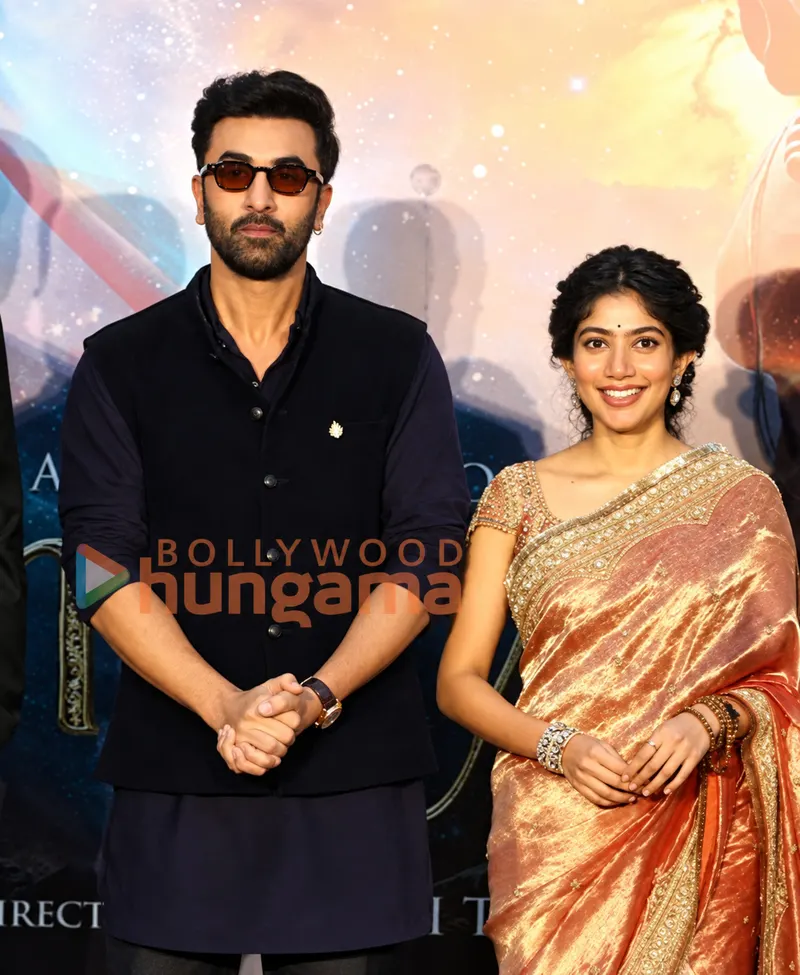
The final weeks have brought a whirlwind of appearances. The cast visited Kaun Banega Crorepati, where Sai Pallavi spoke about praying to Sita before playing her. Major events in Hyderabad and Mumbai drew crowds, with The Hollywood Reporter India reporting that YouTube star MrBeast joined Ranbir Kapoor and Sai Pallavi at a Mumbai event in September. Lighter moments went viral too, including a widely shared clip in which producer Dil Raju mixed up Ranbir Kapoor's name with Ranveer Singh's.
The film has even become a vehicle for other films. Reports say a promo for Shah Rukh Khan's King will play with Ramayana in cinemas, a sign of how large an audience the industry expects it to draw.
The premiere moment
The Los Angeles world premiere on 27 October turned the conversation from previews to verdicts. Fans chanted for Yash on the red carpet, and attendees posted reactions comparing the film's scale to The Lord of the Rings. Within hours, the dominant online summary had crystallised: positive on spectacle, divided on emotion. That framing will shape how the full reviews are read.
Next: from buzz to word of mouth
From 5 November, the campaign hands over to the most powerful marketing force in Indian cinema: families talking to families. Ramayana's opening weekend will be driven by hype, but its second and third weeks will be driven by what grandmothers, parents and children say to each other after the show. The post-credit scene, which Bollywood Hungama reports may reveal the date of Part Two, could become the first major social media moment of release week.
Jubliz takeaway: Ramayana's campaign has proved that devotional timing and global spectacle can coexist. Its one persistent weakness has been the VFX conversation, which the makers can only fully close once audiences see the finished film on the biggest screens.